
This article contains affiliate links. When you book a hotel, a car rental or an activity through these links, we receive a commission from the advertiser at no extra cost to you 💕. By using them, you support us while paying exactly the same price 🙏. We earn a commission from the advertiser at no extra cost to you 💕. Thank you!
Our partners

CONTENTS
INTRODUCTION 💥
There are lots of things to know before visiting Mexico to plan your trip as well as possible 📝. That’s why I’ve put together my TOP 10 things to know before going to Mexico, from our month-long road trip in October 2021 with Adeline. If you read our articles often, you know I like to research the countries we visit to learn about the culture and customs ahead of time 😉.
In this article, we mostly talk about Mexico’s east coast, meaning Quintana Roo and the Yucatán: Cancún, Tulum, Bacalar, Valladolid, Mérida and the islands. Entry requirements, safety, transportation, health, money, sargassum, tipping… We’ve updated everything with 2026 info, while keeping what we experienced on site. I’m sure that after reading this, you’ll leave with much more peace of mind 🇲🇽.
THE MAP OF OUR MEXICO ROAD TRIP 🗺️
To help you plan your itinerary, we’ve gathered every place from our 30-day road trip in Mexico 🇲🇽 on an interactive map: cenotes, Mayan sites, beaches and stopover towns, from Yucatán to Quintana Roo. Click on each pin to discover the place in detail 📍. And to keep it handy during your trip, open it in Google Maps: you’ll find it easily on your phone 📱.
Our itinerary
Our trip to Mexico
1 month8 stops2 states: Yucatán & Quintana RooCar + ferry to the islands
The stops, in order
- 1
Cancún
1 night
Arrival by plane, then last night before the flight home
- 2
Holbox
3 nights
Beaches, sunsets and a timeless vibe
- 3
Valladolid
5 nights
Suytun, Oxman, Ik Kil, Chichén Itzá, Ek Balam
- 4
Mérida
3 nights
Uxmal and the 3 cenotes of Cuzamá
- 5
Bacalar
5 nights
The lagoon of seven colors and its cenotes
- 6
Tulum
4 nights
Ruins, Coba, Sian Ka'an, Cenote Azul and Calavera
- 7
Cozumel
4 nights
Scuba diving and snorkeling
- 8
Isla Mujeres
3 nights
Jet skiing, beaches and the end of the road trip
Loading the map…
Click on a pin to discover each place
Open in Google MapsENTRY REQUIREMENTS, VISITAX AND STAYING CONNECTED: WHAT YOU NEED BEFORE YOU GO 🛂
YOUR PASSPORT AND THE ENTRY FORM
For a tourist trip, French citizens (like many other nationalities) don’t need a visa: you need a passport valid for your entire stay. The entry form (the FMM) is now digital and is handled at immigration when you arrive. Check the latest requirements on your government’s travel advice page (for French travelers, the Mexico page of France Diplomatie) before you go.
When we arrived in Cancún, the immigration officer asked us several questions: our return ticket, the address where we’d be staying, how many days we were staying and what we’d come to do. Nothing nasty, but have this information on hand (on your phone or printed), it goes much faster 👍.
THE VISITAX, QUINTANA ROO’S TOURIST TAX
Since 2021, Quintana Roo (Cancún, Tulum, Playa del Carmen, Bacalar, the islands…) has asked foreign tourists to pay the Visitax, a tourist tax of about 285 pesos per person in 2026. It’s paid online on the Quintana Roo government’s official website, normally before leaving the state.
To be honest with you: it’s normally mandatory, but no one has ever asked us for it, nor the travelers we know who’ve gone since. Checks do happen at Cancún airport according to some recent reports, though, so it’s still a document worth having on your phone. ⚠️ Watch out for unofficial websites that sell it for more.
STAYING CONNECTED WITH AN ESIM
For GPS, translations and bookings, having data as soon as you land is a game changer 📱. The easiest way is to get an eSIM before you leave: it installs in a few minutes and works as soon as you land, with no need to hunt for a shop on site.
👉 Compare eSIM plans for Mexico on Holafly before you go, and you’ll have data as soon as you step off the plane.
IS MEXICO A SAFE COUNTRY? 🛡️
On a trip to Mexico, you need to stay alert and remember that you’re in a country where poverty can lead to difficult situations. To give you an idea, the minimum wage is 315 pesos a day in 2026, or about 9,500 pesos a month 😨. So it’s important to follow a few common-sense precautions 👇
- 💍 Avoid showing signs of wealth (jewelry, expensive cameras) in certain places.
- 📍 Stay in tourist areas and ask locals and your hosts for advice 💬.
- 🌙 Avoid driving at night: in the Yucatán and Quintana Roo, it’s not the most dangerous, but you should still be careful 👀.
- 🚨 Don’t leave anything visible in your car, even for a few minutes.
- 🏛️ Check official travel advice (for French travelers, France Diplomatie’s advice), which notably calls for vigilance against extortion attempts in Quintana Roo during high season.
Simply put, it’s mostly about staying alert to avoid mishaps. Mexico is still a country you can visit with peace of mind, even if, compared to other countries we’ve done like Iceland, it’s the complete opposite 🙄!
If you’d rather have a trip organized from A to Z, you can also go through companies that offer all-inclusive packages. That’s the case, for example, with Voyage Privé, to discover Mexico through their travel deals.
CAR, BUS, TAXI OR TRAIN IN MEXICO? 🙃
BY CAR
Renting a car in Mexico was our choice for discovering the country 👍. The No. 1 advantage is being independent for your entire stay: leaving whenever you want, stopping where you hadn’t planned, going where buses never go 🥰. On the other hand, depending on the time of year, the rental can weigh heavily on your budget, and there are lots of scams involving insurance and deposits 😶.
The roads are generally in good condition in the Yucatán and Quintana Roo, with a few big potholes to avoid. Above all, watch out for topes, Mexican speed bumps 😂: they’re everywhere, in villages, on the way out of towns and sometimes even on major roads, often with no sign 😱. After a few kilometers, you get used to them very quickly.
⚠️ Heads up: traffic laws exist, but they’re not strictly followed. Seat belts are mandatory but rarely worn, and traffic lights are placed after the intersection, not before it as in France.
RENTING A CAR IN MEXICO 🚗
To explore Yucatán and Quintana Roo, we think a rental car is the best option: you’re free to string together cenotes, Mayan sites and beaches at your own pace, without depending on bus schedules or organized tours 🌴.
We did our whole one-month road trip by car, and everything went really well. Here’s the agency we used and recommend, plus an alternative if you’d rather compare 👇
Our rental tip
Renting a car in Mexico
The agency we used, and an alternative to compare.
TouraCancun
Car rental in Mexico
We rented with them for our whole road trip: we recommend them without hesitation!
Our budget€95028 days, insurance included · ~€34/day
- Tested for 1 month
- Pick-up in Cancún
- Our go-to in Mexico
DiscoverCars
Rental comparison site
To compare several rental companies in a single search.
Excellent rating290,000+ Trustpilot reviews
- 1,000+ rental companies compared
- Free cancellation
- 24/7 support
To compare before you choose
Good to know before you rent
- Third-party liability insurance is mandatoryIn Mexico, it's often not included in the price shown online: check before you pay.
- A deposit on a credit cardAn amount is held on your card for the whole rental. Bring a card with a high enough limit.
- Your French driving license is enoughIt's accepted for tourists. The international driving permit is optional: only if you want one.
- Photos and video at pick-upFilm the car from every angle when you collect it, to avoid any dispute when you return it.
- Filling up at the gas stationCheck that the pump meter is at zero before the attendant starts.
- Watch out for “topes”These speed bumps are everywhere, sometimes without a sign: slow down as you enter villages.
BUSES AND COLECTIVOS
Buses are very well developed in Mexico and can take you almost anywhere 👍. ADO is the best-known company, comfortable and often the cheapest for long trips. For shorter trips, there are colectivos, minibuses that pick you up and drop you off wherever you want along their route. The first time, it feels pretty strange 😅! The bus is cheap, but you depend on schedules and the destinations served.
TAXIS AND UBER
There are lots of taxis in the cities. In a group, it’s often a good compromise, but always agree on the price before you get in: taxis don’t have meters, and scams are common 💸. For my part, it’s the last way I’d choose to get around 😠.
Uber works in several cities like Mérida, but in Cancún, things are still tense with the taxis, which have already blocked access to the airport in protest. At the airport, the app mainly lets you book an authorized taxi in advance.
THE TREN MAYA
It didn’t exist yet when we traveled. Since then, the Tren Maya 🚅 runs on a loop of more than 1,500 km linking Cancún, Playa del Carmen, Tulum, Bacalar, Valladolid, Mérida and Campeche, all the way to Palenque. There are several fares depending on the traveler: a Mérida → Cancún trip costs about 1,000 pesos at the international rate and takes about 3.5 hours. Tickets are sold at stations or on the official website.
It’s a real alternative to the bus for getting between the big cities, but stations are sometimes far from town centers and sites: a car is still more practical for cenotes and remote Mayan sites like Calakmul.
VACCINES AND HEALTH: WHAT TO PLAN FOR 💉
For Mexico, no vaccines are mandatory for travelers coming from France. According to the Institut Pasteur, the hepatitis A vaccine is recommended for all travelers. Depending on your trip, your doctor may also recommend typhoid, rabies (long or adventurous trips) or, in some cases, the dengue vaccine. Check with your doctor or a travel clinic.
The main risk is still mosquitoes 🦟 (dengue, chikungunya): good repellent and long clothing in the evening are essential, especially in the jungle. Personally, we’d had the hepatitis A vaccine and, since we work in healthcare, we already had hepatitis B. And good news: no health problems at all for a whole month, and even the mosquitoes were pretty discreet 😊.
👉 Also think about travel insurance that covers medical expenses: in Mexico, private clinics are expensive.
IS THE TAP WATER SAFE TO DRINK? 🚰
Tap water isn’t safe to drink in Mexico 👊. For a whole month, we never drank it, even when it looked clean. We did brush our teeth with it, though, with no problems at all.
It’s not very eco-friendly, but you’ll have to buy bottles or 5-liter jugs (many places to stay also have water dispensers) 🏪. In restaurants and hotels, ice is made with purified water, so no need to skip it 👍.
CASH OR CARD? 💰
In Mexico, the local currency is the Mexican peso. You can pay in US dollars in tourist areas, but I don’t recommend it: you’ll lose out on the exchange rate.
In our experience, cash wins. We paid by card very rarely, except at hotels. And even there, some hotels asked us for a surcharge to cover the card fee 😕. Cards work at hotels, supermarkets and restaurants in tourist areas, but colectivos, small stalls, markets, many cenotes and tips are paid in pesos.
So remember to withdraw regularly so you always have cash on you. We explain everything (banks, fees, limits, the conversion to decline) in our article Where to withdraw money in Mexico?
SARGASSUM IN MEXICO: SHOULD YOU WORRY ABOUT IT? 🌊
It’s one of the topics that comes up most on forums. Sargassum is a large brown seaweed that floats in mats in the Atlantic and washes up on Caribbean beaches. As it decomposes, it turns the water brown and gives off an unpleasant smell 🤢.
The phenomenon has grown sharply with climate change. In 2026, the influx started as early as January instead of spring, and the year broke a record with more than 130,000 tons collected in Quintana Roo. The worst-hit season generally runs from spring to late summer, peaking around May-June, then the influx drops sharply in fall and winter.
We went in October: we saw a little, but the beaches were pretty nice 🏖️. So it’s not a disaster on every trip, but it’s important to know about before booking a 100% beach vacation. Mexico takes the issue very seriously, by the way: anti-sargassum barriers at sea, Navy boats and cleanup crews on the beaches.
Good news: coastlines that don’t face the open sea, like western Cozumel, Holbox or Playa Norte and the south of Isla Mujeres, are generally much less affected. And inland, the Bacalar cenotes, Los Rápidos and the lagoon aren’t affected at all 😉.
WHEN TO GO TO MEXICO? ☀️
On the Yucatán Peninsula, it’s hot all year round, but there are two distinct seasons:
- ☀️ The dry season, from November to April: the best weather, less humidity, but also more people and higher prices (especially at Christmas and Easter).
- 🌧️ The rainy season, from May to October: strong heat and humidity, showers that are often short in the late afternoon, fewer tourists.
- 🌀 Hurricane season officially runs from June to the end of November, with a higher risk from August to October.
We went in October: it was very hot and humid 🥵, but there were few people at the sites and on the beaches, which was a real treat. It was also a great time for scuba diving in Cozumel 🤿. If you go at this time of year, keep an eye on the weather and get insurance that covers cancellations.
TIPPING, OR “PROPINA,” IN MEXICO 🤑
In France, tipping is rare and often reserved for truly exceptional service. In Mexico, it’s the complete opposite: the propina is part of everyday life. Legally, it’s voluntary, but in practice it’s almost mandatory and strongly expected, especially since wages are very low.
At restaurants, expect at least 10% of the bill (10 to 15% in tourist areas). That’s what we gave almost everywhere. It’s also customary to leave a few pesos for the parking attendant, the gas station attendant or the people who bag your groceries at the supermarket ☺️. Giving nothing is rather frowned upon.
⚠️ Heads up: check your bill. Some restaurants already include the propina (“servicio incluido”), so don’t pay it twice. And know that a restaurant can’t add it without your consent.
By the end of the trip, these tips add up to a small budget that’s best planned for from the start 😕.
DO YOU ALWAYS HAVE TO HAGGLE IN MEXICO? 🗯️
Yes, in tourist areas, haggling is a must. Activities, tours (like the 3-island tour in Holbox), taxis, souvenirs, cigars, handicrafts… The prices quoted to tourists are often well above the real price, and it’s common to be able to cut the price in half, or even by two-thirds 💸. It’s a bit like in Morocco: you have to negotiate, smile, and not hesitate to walk away if the price doesn’t suit you. Sometimes the seller won’t budge a single peso, and that’s their right too.
On the other hand, you don’t haggle in shops with posted prices, or in restaurants or supermarkets.
It’s maybe one of the things I liked least on our trip: in very touristy places, you sometimes feel like a walking wallet, and you have to stay alert to certain schemes. It’s pretty tiring after a while, especially when you realize you can easily get the price down by ten euros or so 😅.
DISCOVER THE NEARBY MAYAN SITES 🦎
Explore the Mayan sites near here through nearly 40 articles about the Yucatán and Quintana Roo 🌍. Discover our best tips, itineraries, history, reviews and much more to make the most of your travel experience and dive 100% into discovering Mexico! It’s the perfect time to carefully plan your vacation ✈️.
DISCOVER THE NEARBY CENOTES 🧐
Now’s the time to explore the cenotes near here on my Mexico travel blog to make the most of your stay 🌟! You’ll find details on the history of these cenotes, our honest review, and captivating photos of your future discoveries 🌍. These articles will be essential resources for planning your trip to Mexico! 🗺️📸
OUR TAKE ON A TRIP TO MEXICO 💭
Mexico is a magnificent country, with so many possibilities: Mayan sites deep in the jungle, cenotes with turquoise water, paradise islands, colonial towns full of life… For a whole month, we were blown away 🤩, and that’s why we’ve written more than 30 articles on Mexico.
You just need to go knowing everything that can happen: car rental scams, inflated prices for tourists, little schemes by some vendors or drivers, and staying careful with your belongings. Once you know the rules of the game, you can make the most of the country 💚.
Our main advice: rent a car, go prepared and always keep some pesos on you. The rest is pure joy 😍.
👉 What about you? Have you been to Mexico, or is it your next trip? What worries you most before you go?
FAQ: YOUR QUESTIONS ABOUT A TRIP TO MEXICO ❓
Here are the questions we get asked most often before a trip to Mexico. Got another one? Ask it in the comments, and we’ll be happy to answer 😉.
No, French citizens don’t need a visa for a tourist stay, and neither do many other nationalities. A passport valid for your entire stay is enough. On arrival, have your return ticket and the address of your accommodation ready: immigration may ask for them.
Yes, in theory: it’s a tourist tax of about 285 pesos per person for foreigners visiting Quintana Roo (Cancún, Tulum, Bacalar…). In practice, it’s rarely checked, but it’s better to have paid it on the official website for peace of mind.
No, tap water isn’t safe to drink. Buy bottles or 5-liter jugs. You can brush your teeth with it, though, and restaurant ice is made with purified water.
No vaccines are mandatory coming from France. Hepatitis A is recommended for all travelers, and depending on your trip, typhoid, rabies or dengue may be advised. Ask your doctor before you go.
The Yucatán Peninsula is one of the most visited regions in the country and can be visited with peace of mind if you stay alert: nothing in the car, no driving at night, no signs of wealth. Check official travel advice (France Diplomatie for French travelers) before you go.
Both are possible, but cash is still king: colectivos, markets, cenotes and tips are paid in pesos. Some hotels even add a surcharge for card payments. Avoid paying in dollars, or you’ll lose out on the exchange rate.
Expect at least 10% of the bill at restaurants, often 10 to 15% in tourist areas. Also keep a few pesos for parking attendants and gas station attendants. Check that service isn’t already included.
Mostly from spring to late summer, peaking around May-June, but the influx sometimes starts as early as January. Between November and February, there’s generally much less. Western Cozumel, Holbox and Isla Mujeres are often spared.
The dry season, from November to April, offers the best weather but also the biggest crowds. We went in October: hot and humid, but very few tourists.
Prices depend on the route and the type of traveler (local, national or international). For foreign tourists, expect about 1,000 pesos for Mérida → Cancún, a trip of about 3.5 hours. Check the latest prices on the official website before booking.
Uber is available, but things are still tense with Cancún’s taxis. At the airport, the app is mainly used to book an authorized taxi. Either way, if you take a regular taxi, agree on the price before you get in.
No, it’s not required. Our English is pretty poor and we only know a little Spanish, and we traveled for a month with no problems thanks to Google Translate. A few words of Spanish are still a real plus for chatting and haggling.
WHERE TO STAY IN MEXICO 🏨
During our one-month road trip in Mexico 🇲🇽, we stayed in 8 different towns, alternating between Airbnbs and hotels. And we were always very happy with where we stayed 😇.
We deliberately avoided “All Inclusive” packages. It’s not our idea of travel: we’d rather be in the heart of towns and villages, eat local and discover the country at our own pace 🌮.
OUR TIPS FOR CHOOSING THE RIGHT PLACE TO STAY
- 📅 Book ahead in high season: the best places go fast and prices climb.
- 🚗 Private or secure parking if you’re traveling with a rental car. You’ll see, it’s not always available, but depending on the town it can be really worth having.
- ❄️ Air conditioning: essential in Yucatán and Quintana Roo, where it’s hot all year round.
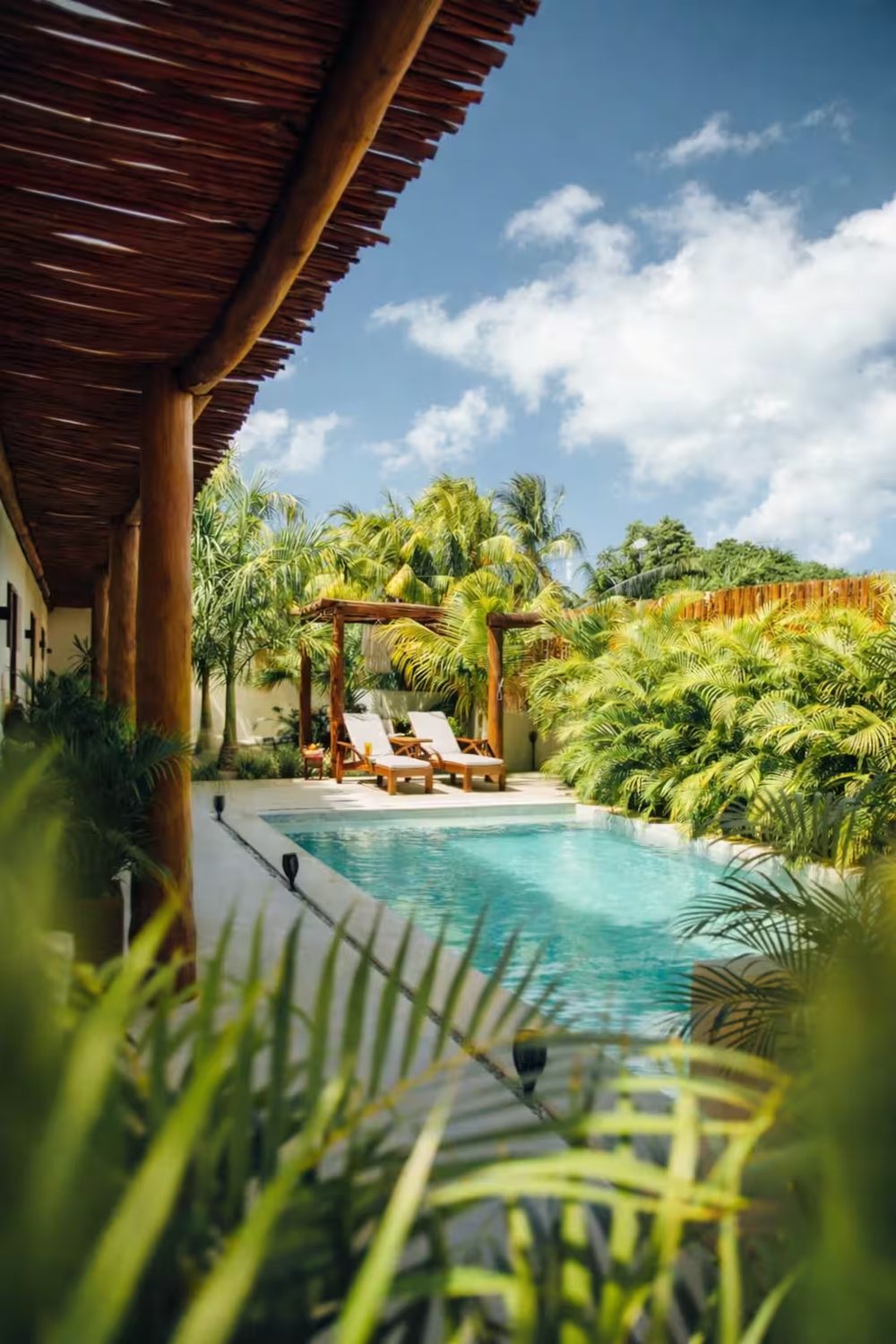
- 🏊 A pool: up to you whether you want one at some of your stays, because it can quickly push the price up.
- 📍 A place close to the center: so you can do everything on foot in the evening. That said, if you like places outside town and you have the car, nothing forces you to stay near the center
- ✅ Free cancellation, to keep your itinerary flexible.
AIRBNB OR HOTEL IN MEXICO?
Both have their advantages. An Airbnb is ideal for more space, a kitchen and living like a local. A hotel is more convenient for one or two nights passing through, with a reception desk and often breakfast included. As for us, we liked both. It all depends on what you want, whether you’re with family, solo or as a couple, and how you like to travel.
HOW MUCH DOES ACCOMMODATION COST IN MEXICO?
There’s something for every taste and every budget. We paid between €40 and €100 a night for two. To be completely transparent with you: €1,800 for 29 nights, or about €62 a night on average (that was in 2021, prices may have changed since).
👇 Here are the 8 places where we slept during our road trip, with our review of each one.
Tested during our road trip
Our 8 places to stay in Mexico
AirbnbHotel
-
Airbnb
Holbox
An incredible room, with the pool right next door to cool off. Just perfect!
- Room
- Pool right next door
- Incredible room
-
Hotel
Valladolid
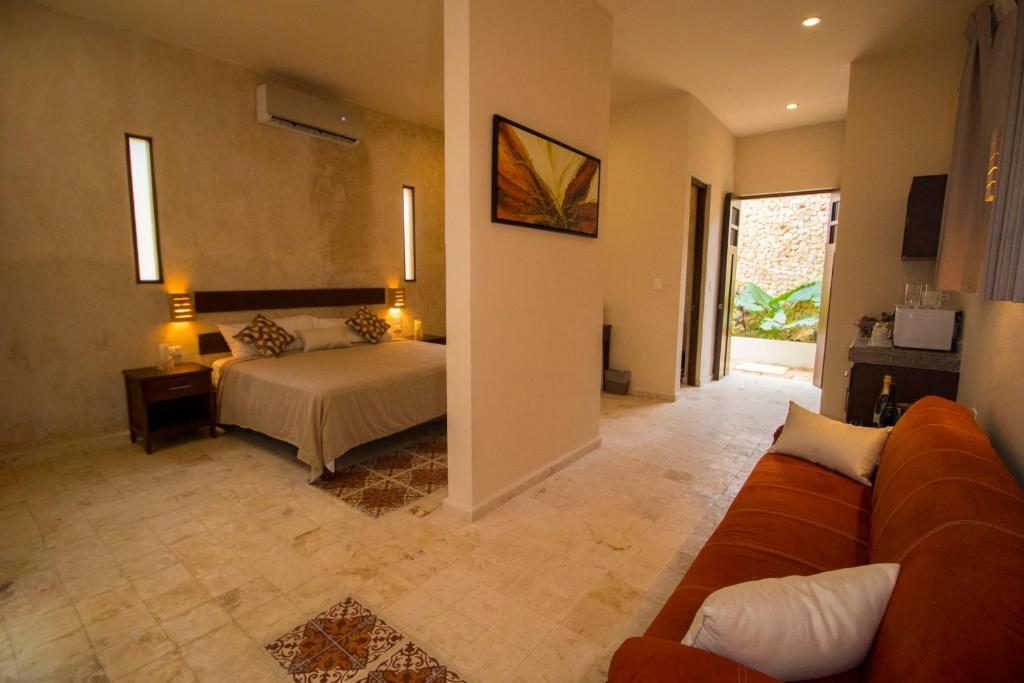
A stunning setting and a super spacious room, ideal for catching your breath between two cenotes.
- Very spacious room
- Pool
- On-site massages
-
Airbnb
Mérida
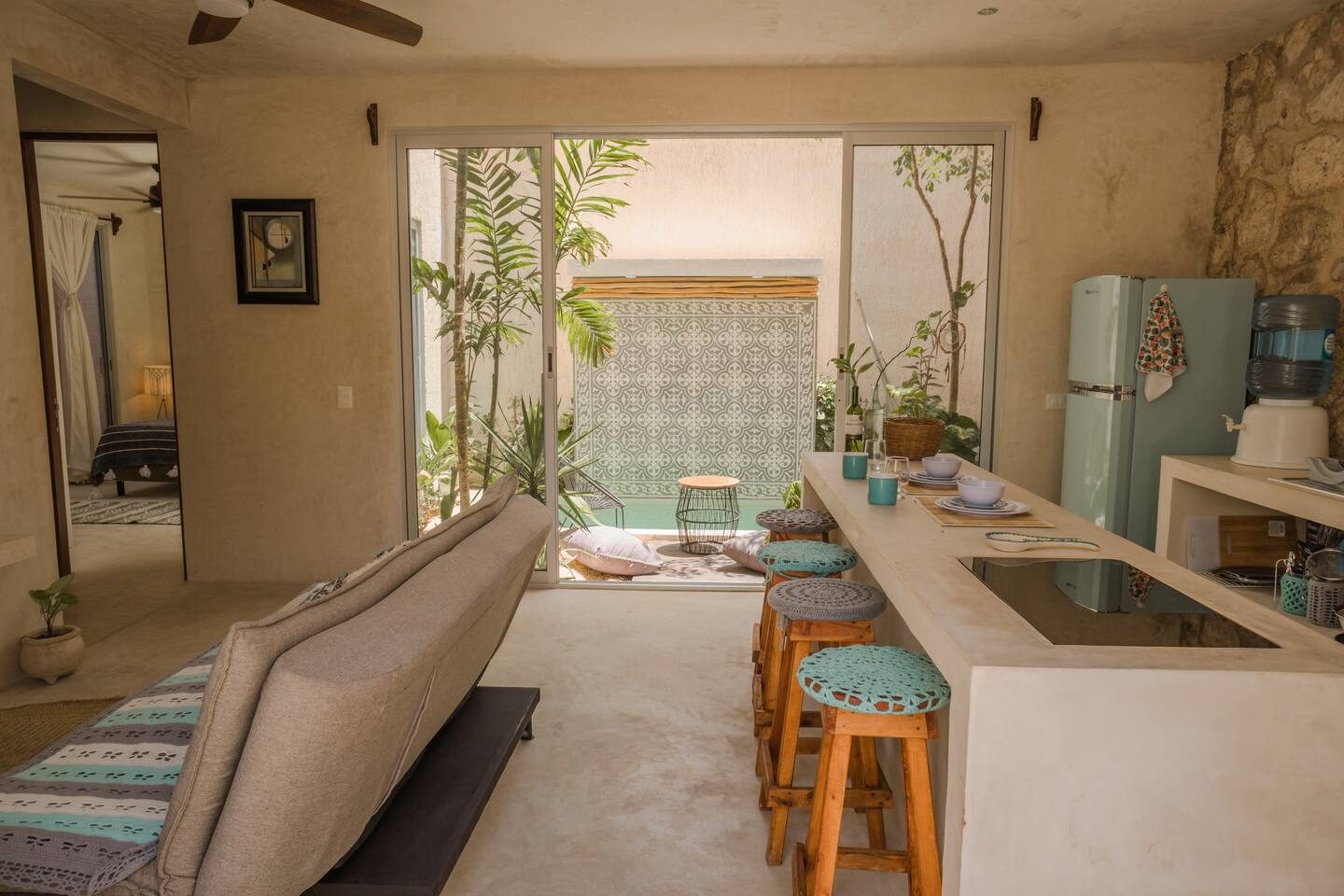
A whole house just for us, with a small pool to relax.
- Whole house
- Small pool
- A bit out of the way
-
Hotel
Bacalar
A gorgeous place right in the town center, with a superb pool.
- Hotel
- Superb pool
- Town center, far from the lagoon
-
Airbnb
Tulum
A whole place with a pool, but very far out: you'll need the car.
- Whole place
- Pool
- Far out, car essential
-
Airbnb
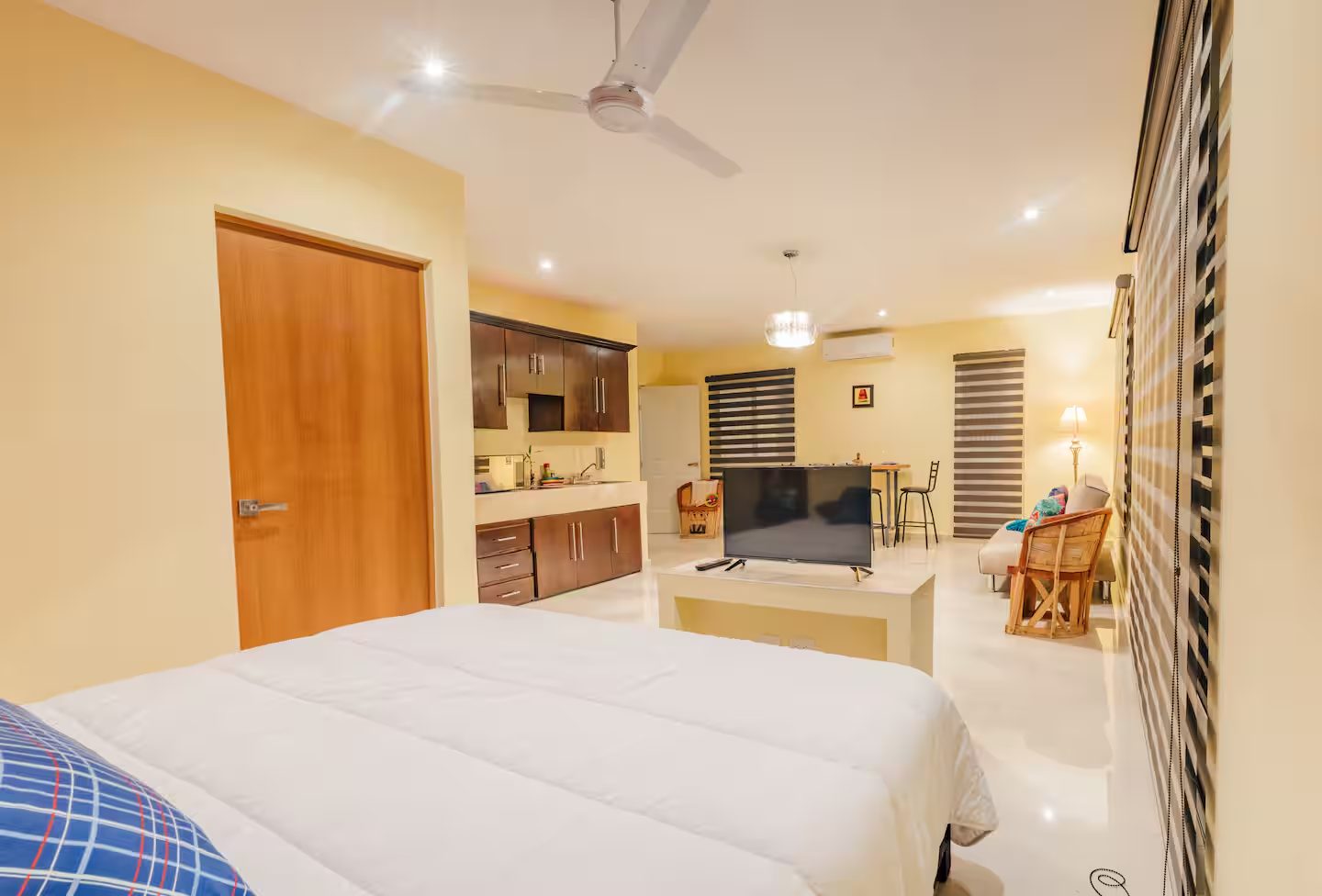
Cozumel
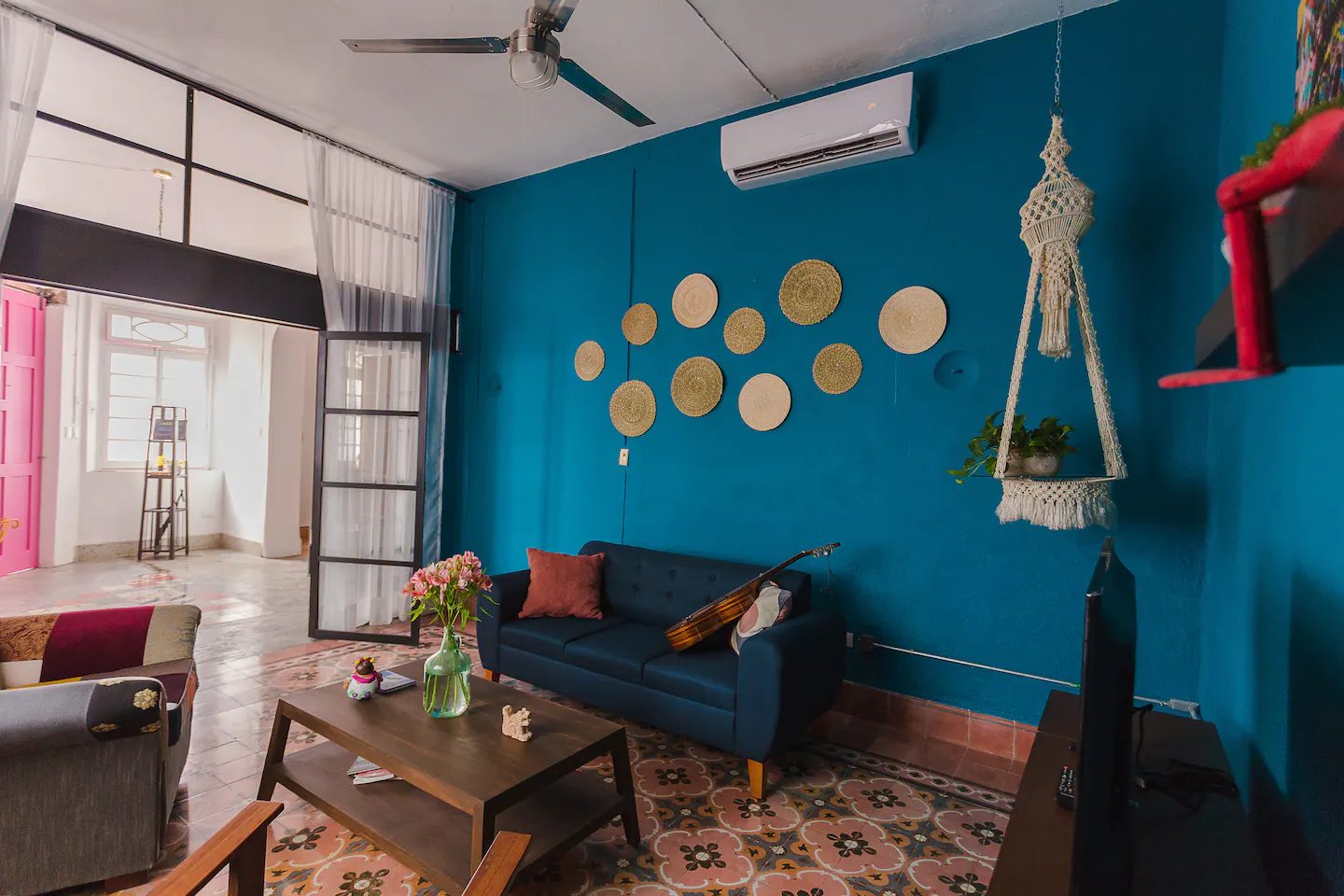
A clean, well-located studio, so you can do everything on foot from the town center.
- Studio
- Clean and well designed
- Close to the center
-
Hotel
Isla Mujeres
A beautiful seafront hotel with a magnificent pool.
- Hotel
- Magnificent pool
- Seafront, a bit out of the way
-
Hotel
Cancún
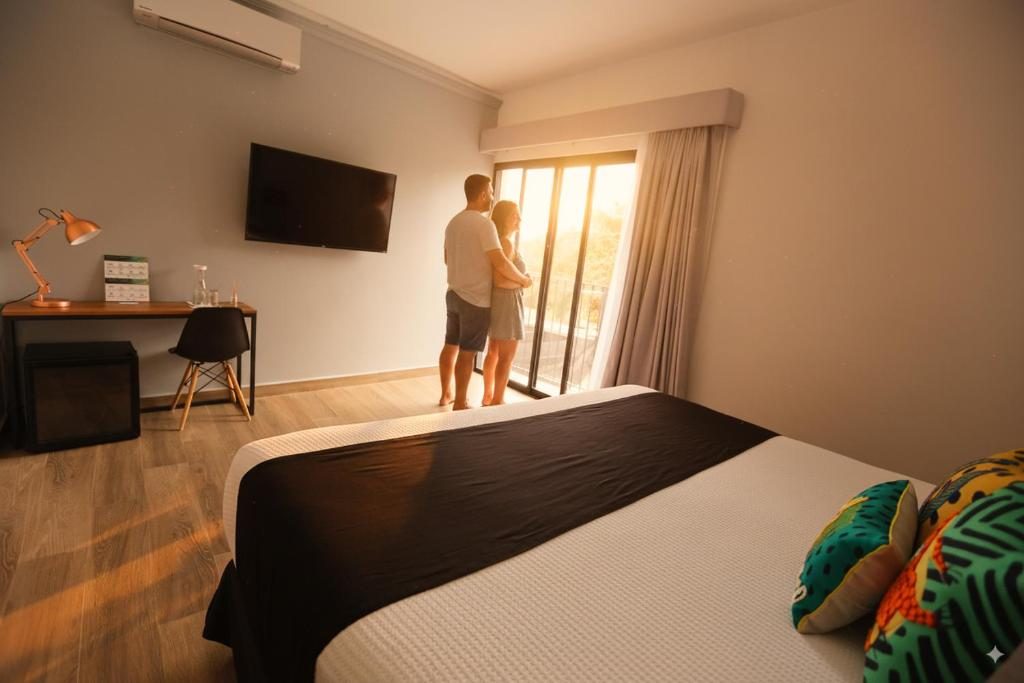
Right next to the airport: perfect for the first or last night of the trip.
- Hotel
- Close to the airport
- Ideal for the 1st or last night
MY MUST-HAVE TRAVEL GEAR 🧳
It’s a question that comes up a lot when preparing a trip “What should I bring?” That’s why you’ll find below some essential travel accessories to set off on vacation with peace of mind (your documents kept safe) 🛡️ . Planning ahead and getting these items in advance helps you save money and avoid paying for some of them on the spot, where they’ll cost you much more 💸 These are the accessories we took to Mexico and still use for every destination we travel to 👇.
Our road trip checklist
What to pack for Mexico?
Most of these items came with us throughout our 30-day road trip.
0 / 12 in my suitcase · check what you already have
- Essential
ElectronicsUniversal travel adapter
In Mexico, outlets are the American type: French chargers won't fit.
- Essential
ElectronicsPower bank
Long days between ruins and cenotes: your phone lasts until evening.
- Essential
Health & protectionBiodegradable sunscreen
Mineral and biodegradable, kinder to cenotes and reefs.
- Essential
Health & protectionMosquito repellent
Mosquitoes are everywhere, especially in the evening and near the jungle.
- Essential
Cenotes & beachWaterproof phone pouch
To film in cenotes and at the beach without any risk.
- Recommended
Health & protectionFilter water bottle
Tap water isn't drinkable in Mexico: filter it and avoid plastic.
- Recommended
Health & protectionTravel first-aid kit
Band-aids, painkillers, anti-diarrhea meds: enough to handle small issues.
- Recommended
Cenotes & beachWaterproof bag
Papers and keys kept dry on boats, at the beach or by the cenotes.
- Recommended
Cenotes & beachWater shoes
For slippery cenote steps and rocky seabeds.
- Recommended
Cenotes & beachMicrofiber towel
Light and quick-drying: perfect for swim after swim.
- Bonus
Travel & securityTSA lock
To lock your suitcase on the plane, with no risk of it being broken at security.
- Bonus
Travel & securityAirTag
To track your suitcase if your luggage is delayed or lost.
Scroll through the list
OUR YOUTUBE VIDEOS IN MEXICO 
During our 30-day road trip in Mexico , we filmed everything! From Holbox to Cancún, by way of Valladolid, Mérida, Bacalar, Tulum, Cozumel and Isla Mujeres, we take you along with us step by step in our vlogs.
You’ll discover the cenotes we swam in, the Mayan sites we explored, the beaches that made us dream, our places to stay, our favorite spots to eat… and above all our honest take on each place: what amazed us, and what disappointed us a little .
If you’re planning your trip, or simply dreaming of getting away, these videos will give you a real glimpse of Mexico, far from the tourist brochures.
Our road trip on video
Our YouTube videos in Mexico
Now watching: Episode 1 · Discovering Mexico & Holbox
21 minEpisode 1Discovering Mexico & Holbox
17 minEpisode 2Cenotes & Mayan cities
9 minEpisode 3Mérida, Uxmal, Cuzamá & the bats
13 minEpisode 4Bacalar, a hidden paradise
12 minEpisode 5Tulum, Coba, Sian Ka'an & Cenote Azul
12 minEpisode 6Cozumel, diving & snorkeling
17 minEpisode 7Isla Mujeres, jet skiing & the end of the road trip
THANKS FOR YOUR FEEDBACK 
Thanks for reading this article all the way to the end 🙏! We hope it helps you plan your trip.
A question, a doubt about your itinerary, or simply want to tell us what you thought? Write to us in the comments. Your messages also help other travelers plan their trip, and they always make us very happy 💚.
And if our articles are useful to you, a quick review on Google or Trustpilot helps us enormously to spread the word about the blog ⭐. Thanks for following us!


21 min
17 min
9 min
13 min
12 min
12 min
17 min