



This article contains affiliate links. When you book a hotel, a car rental or an activity through these links, we receive a commission from the advertiser at no extra cost to you 💕. By using them, you support us while paying exactly the same price 🙏. We earn a commission from the advertiser at no extra cost to you 💕. Thank you!
Our partners





CONTENTS
INTRODUCTION 💥
Right on the border between France 🇫🇷 and Spain 🇪🇸, the summit of La Rhune (905 m) offers one of the most beautiful views in the Basque Country, between the ocean and the Pyrenees 🌄. There are two ways up: the little La Rhune rack railway, running since 1924, or hiking.
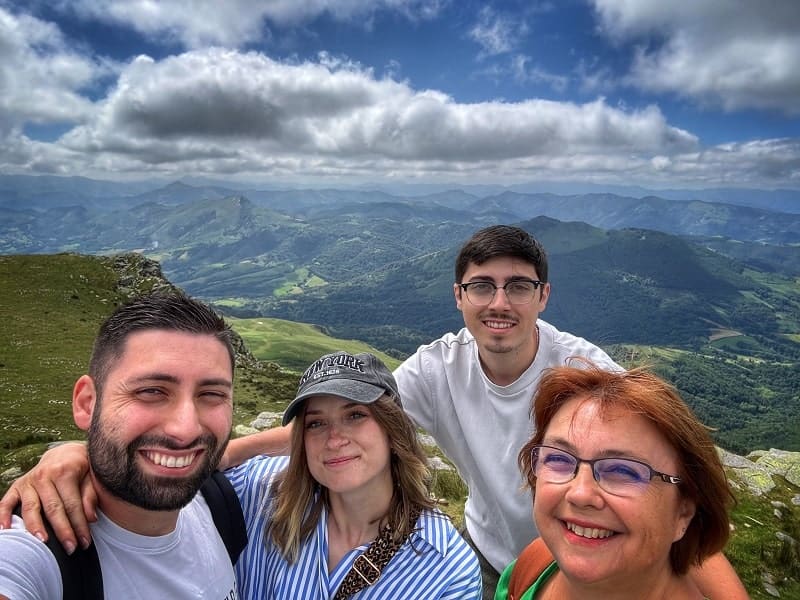
We took the train up in July 2024, as a family, with perfect weather. In this article, we give you our review of the La Rhune train, the prices, whether you need to book, how to avoid the parking hassle, which side of the train to choose, what to do at the top, and how to hike up La Rhune.
Planning a longer stay in the Pyrenees? Also check out our Cirque de Gavarnie, the hike to Lac d’Oô, our pick of places to stay in the Basque Country and all our articles on France.

OUR LA RHUNE TRAIN REVIEW IN A NUTSHELL ⭐
We absolutely loved it. Climbing aboard a little wooden train that slowly makes its way up the mountain, watching the ocean appear around each bend, then reaching the very top with France on one side and Spain on the other: all you can say is “wow” 😍.
WHAT WE LOVED 👍
- 🚂 The train itself: a real vintage train, full of character, that’s part of the experience.
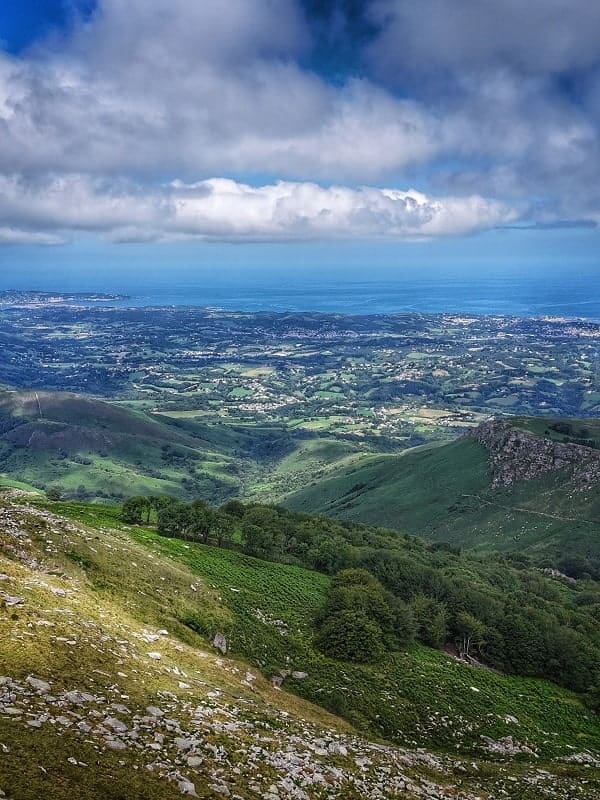
- 🌊 The view on the way up: the Basque coast, the ocean and the Pyrenees.
- 🇫🇷🇪🇸 The summit on the border: you cross from one country to the other in a few steps, it’s really interesting.
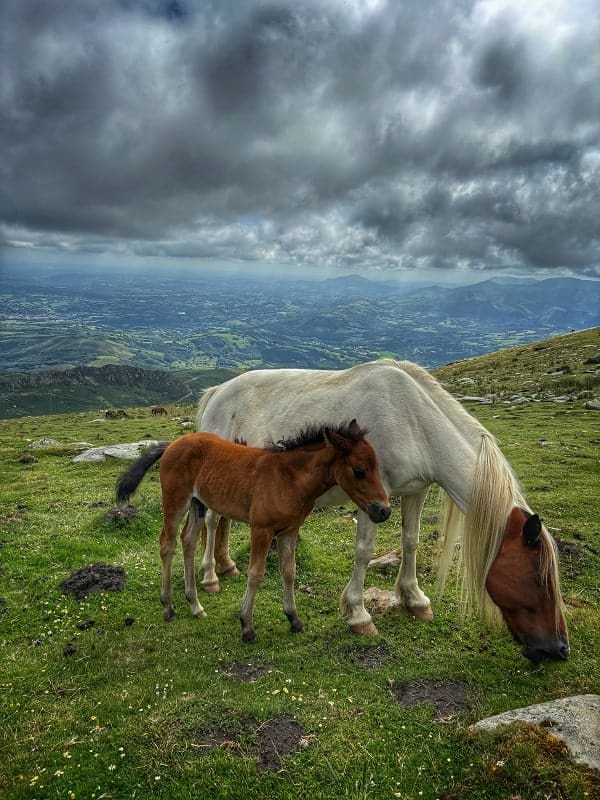
- 🐴 The pottoks, those little free-roaming Basque horses.
WHAT MIGHT DISAPPOINT YOU 👎
- 🚗 Parking: there aren’t enough spaces, and we struggled a bit.
- 💶 The price, which has gone up a lot in recent years.
- ☁️ The weather: in fog, you can’t see a thing, and tickets aren’t refundable.
Book your time slot online a few days ahead, keeping an eye on the weather, and arrive early in the morning to find a parking space.
WHAT IS THE LA RHUNE TRAIN? 🚂
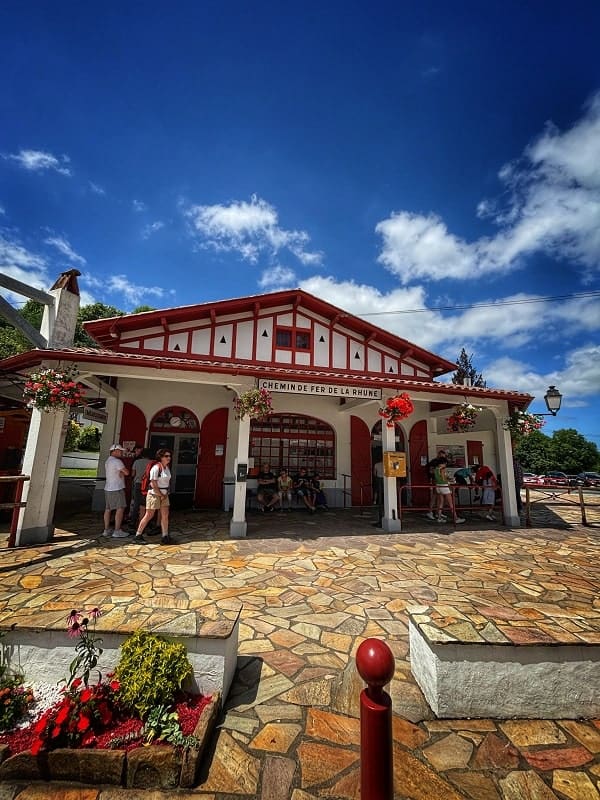
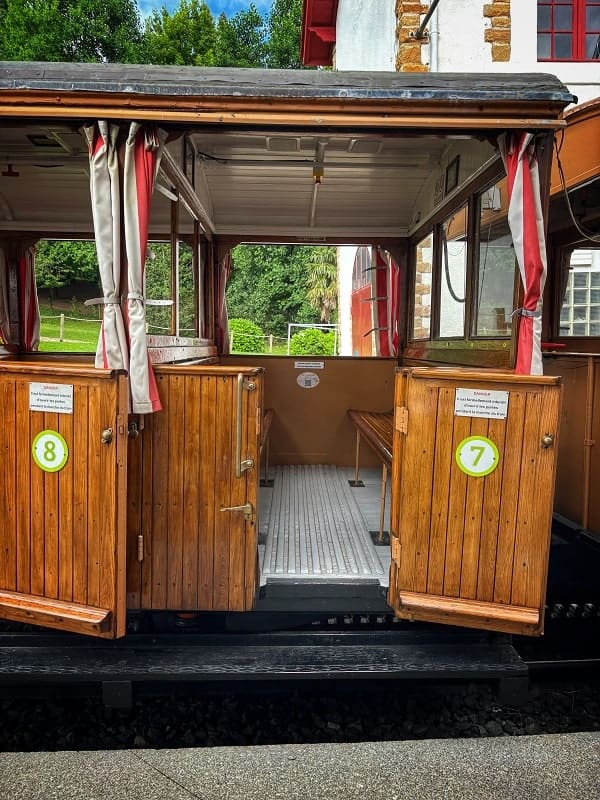
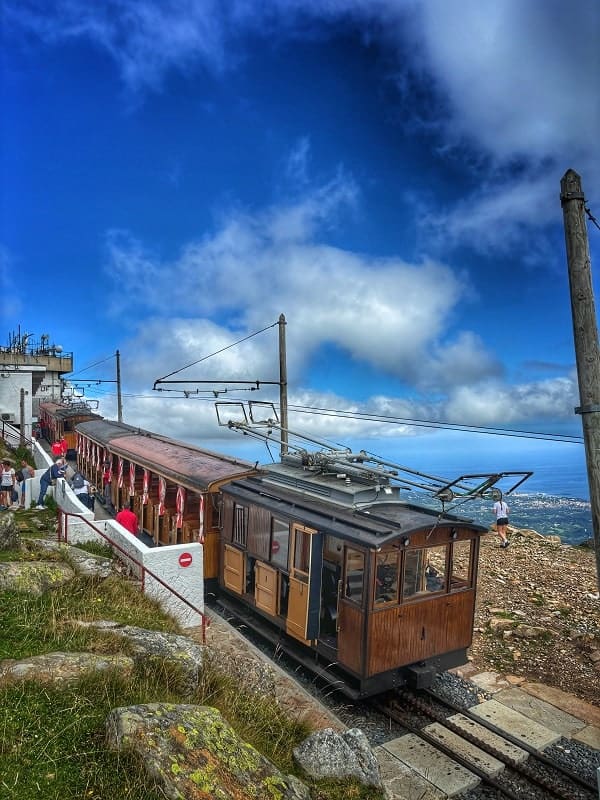
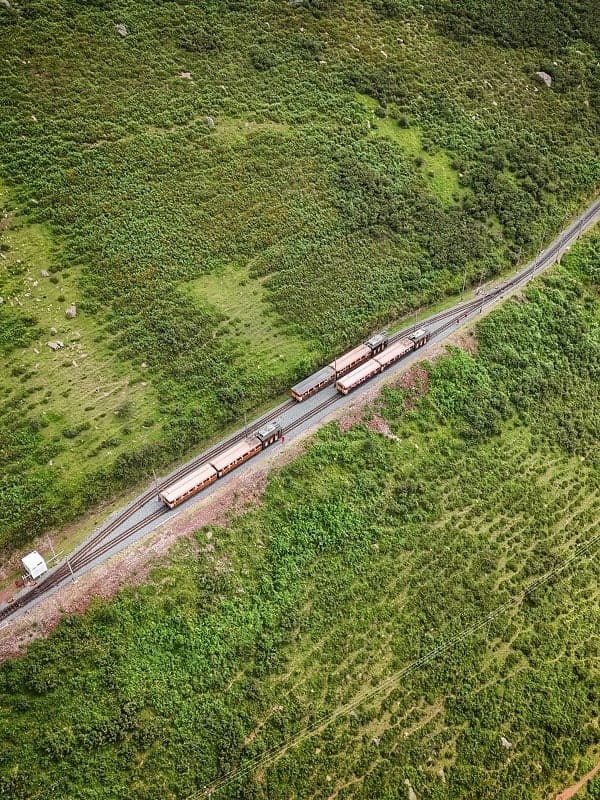
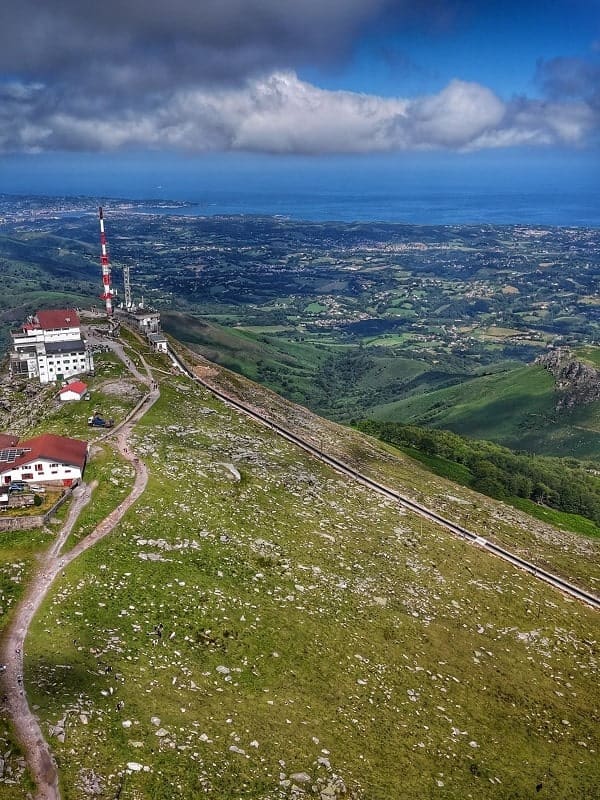
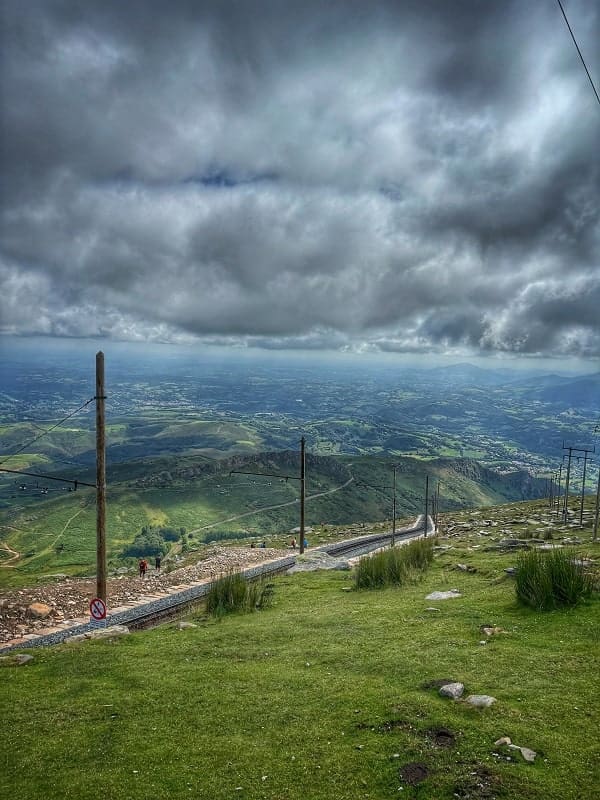
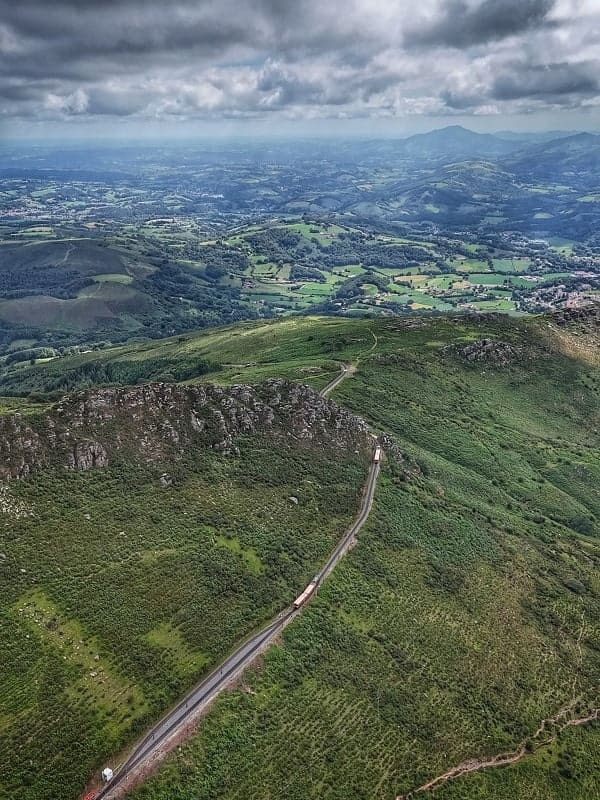
The La Rhune train is a rack railway that opened in 1924. It leaves from the Col de Saint-Ignace, in the town of Sare, and climbs to the summit of La Rhune, at 905 meters. Its original wooden cars travel at about 8 km/h: the ride up takes about 35 minutes.
With several hundred thousand passengers every year, it’s one of the most popular outings in the Basque Country, and it’s easy to see why.
OUR ARRIVAL AND PARKING AT THE LA RHUNE TRAIN 🅿️
As soon as you arrive at the Col de Saint-Ignace, you feel the retro atmosphere of the place. But before heading up, you have to park, and that’s where things get tricky 😅. The station parking lot doesn’t have enough spaces: there are some, but not a lot, and the site is a bit out in the middle of nowhere. We struggled a bit to find a spot.
Our advice: arrive as early as possible. The earlier you get there, the fewer problems you’ll have. Otherwise, you’ll have to park farther away, along the road, and walk to the station. Once we’d parked, we didn’t wait long, since we’d booked our time slot.
- Parking is free, at the station, at the Col de Saint-Ignace (D4, 64310 Sare).
- In July and August, it's often full by late morning.
- Leave some margin before your train time: it won't wait for you.
THE RIDE UP: OCEAN SIDE OR MOUNTAIN SIDE? 🌊⛰️
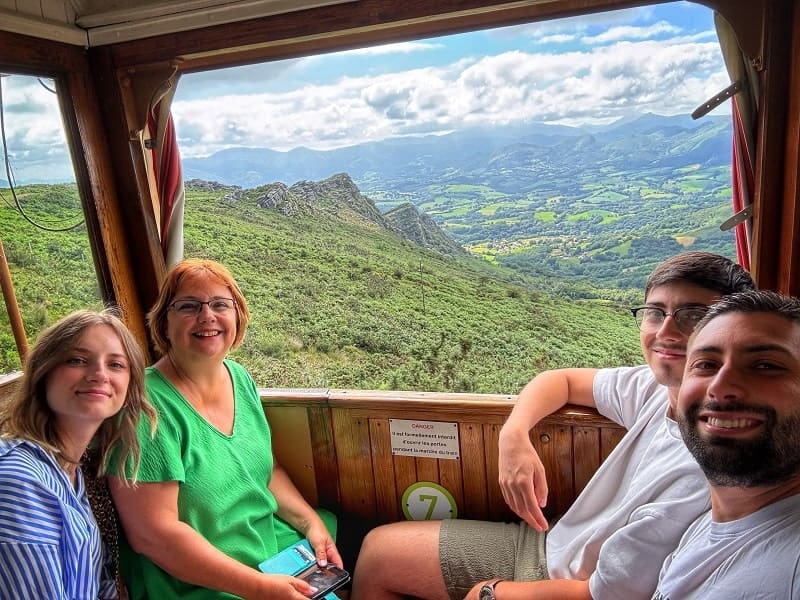
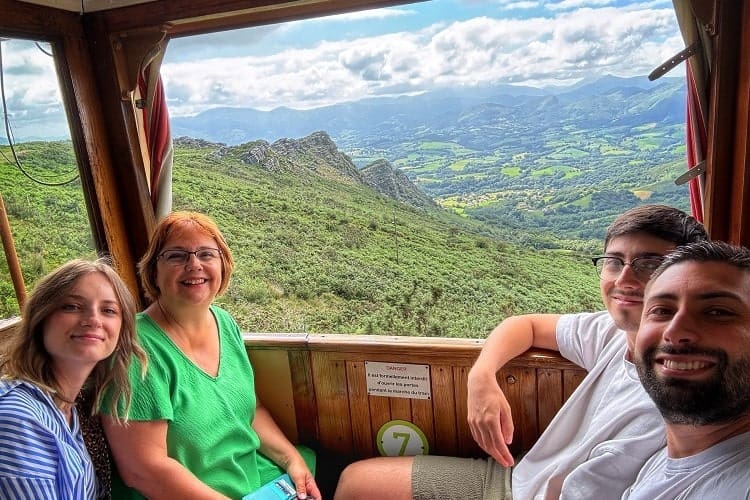
The climb is a wonderful experience. The train goes up slowly, and the view gets more and more impressive with every bend: the Basque coast and the ocean on one side, the Pyrenees on the other. You pass pottoks, free-roaming sheep and sometimes griffon vultures above the ridges 🦅.
On the way up, we sat on the ocean side, and it was really, really beautiful. But honestly, there isn’t really a best seat: both sides are stunning, and you get to enjoy the view on both. The main thing is to enjoy the moment.
Don't stress about your seat: sit on one side on the way up and the other on the way down, and you'll have seen it all.
WHAT TO DO AT THE TOP OF LA RHUNE? 🏔️
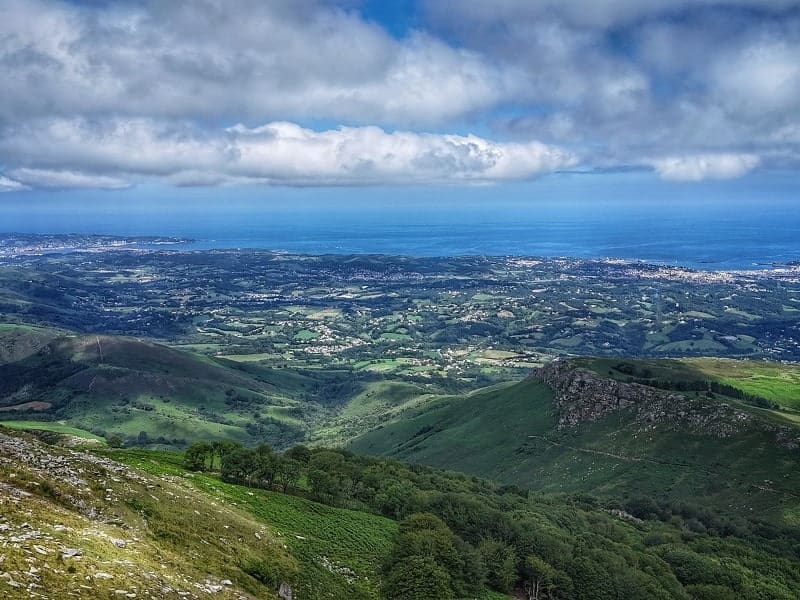
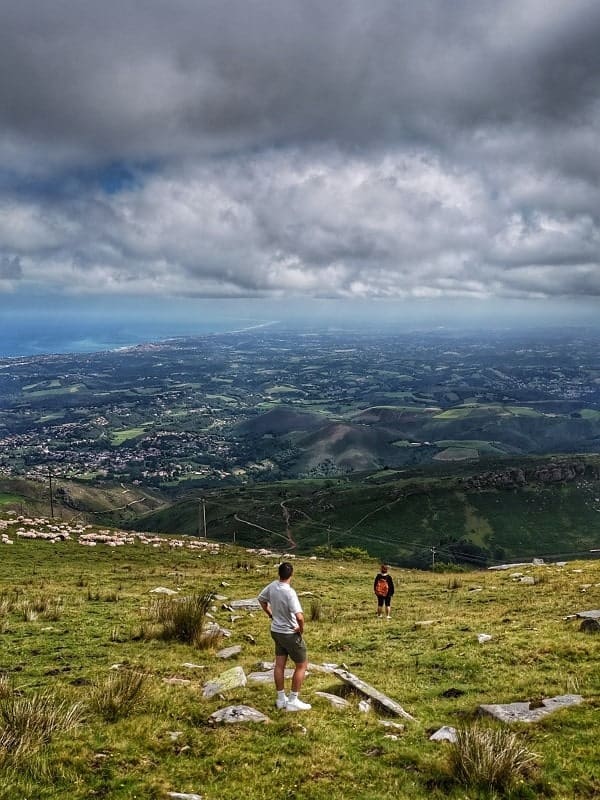
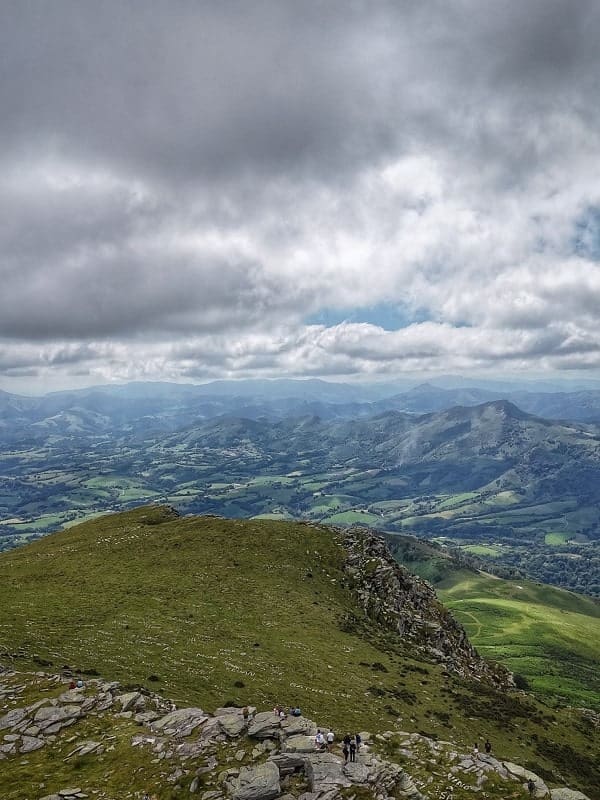
Reaching the summit is the highlight. A big plateau opens up with a 360° view: the ocean, the bay of Saint-Jean-de-Luz, the Pyrenees and the Basque backcountry. We stayed between 1 and 1.5 hours, and that’s plenty.
Here’s what you can do up there:
- 👀 Walk around the summit to enjoy the viewpoints on every side.
- 🇪🇸 Cross over to the Spanish side: the summit straddles the border. We saw the French side and the Spanish side, and it’s quite something to think you’re standing on the line between the two countries.
- 🛍️ Browse the ventas, the shops on the Spanish side.
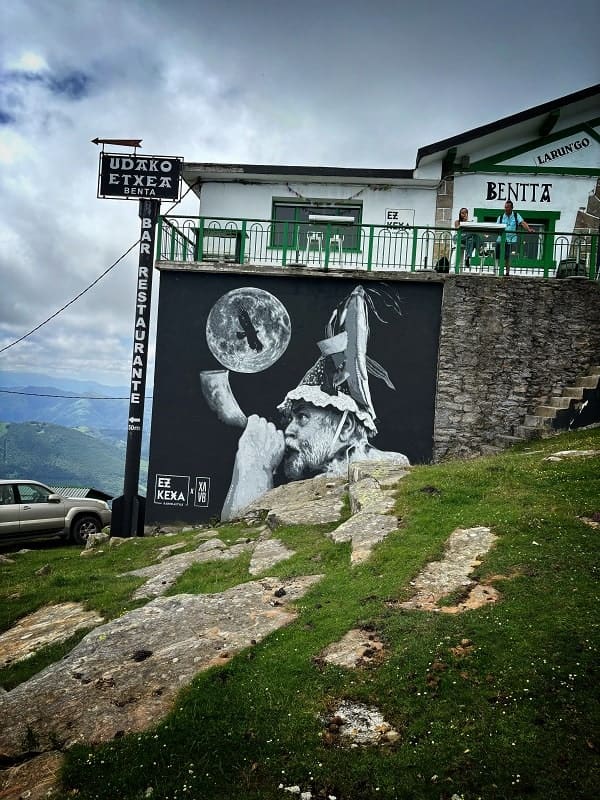
- 🍽️ Have a drink or a bite at the summit restaurant. We didn’t; we preferred to wander around.
- 🐴 Watch the pottoks, often very close to visitors.
As for us, I was able to fly my drone, and the footage is gorgeous: you’ll find it in the video at the top of the article 🎥.
- It's a bit cooler at the top, even in summer: bring a light sweater or a windbreaker.
- There were people at the summit in July, but nothing excessive.
LA RHUNE TRAIN PRICES IN 2027 💶
Since the 2027 prices haven’t been published yet, here are the official 2026 season prices for a round trip:
- 👩 Adult (12 and up): €26
- 🧒 Child (4 to 12): €18
- 👶 Under 4: free, on a lap (a €0 ticket is required)
- 👨👩👧👦 Family (2 adults + 2 children): €82
- 🐶 Dog: €6.50
- ⬇️ Ride down only: €23.50 adult, €15 child (sold at the summit, seat not guaranteed)
Note: these aren’t the prices we paid. When we visited, in July 2024, we paid €24 per person, and prices have gone up since. Always check the day’s price before booking.
There’s no one-way ticket for the ride up. Find the latest prices on the official La Rhune train website.
DO YOU NEED TO BOOK THE LA RHUNE TRAIN? ⏰
Yes, especially in summer. We’d booked our 10:10 a.m. slot in advance, and we were glad we did: it’s a very popular outing, and when a train is full, you have to wait for the next one, sometimes for a long time. In July and August, the morning slots go fast.
The catch is the weather: tickets can’t be changed or refunded, and in fog, you can’t see anything from the summit. So ideally, book a few days ahead, once you know the forecast.
SCHEDULE AND OPENING SEASON
The train runs every day from late March to early November. In July and August, departures are roughly every 40 minutes, from 8:20 a.m. to 7:30 p.m. Off-season, there are fewer. The train closes in winter and reopens in March 2027.
HIKING UP LA RHUNE 🥾
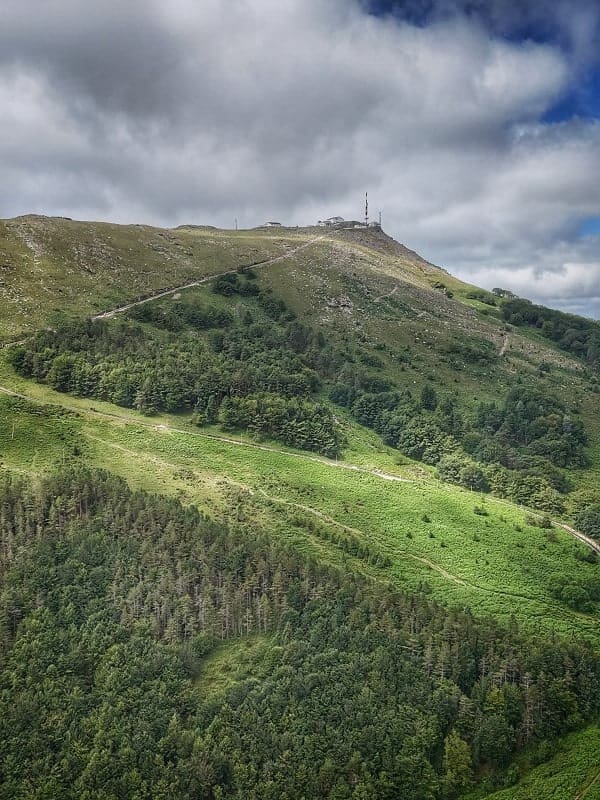
We took the train up. But you can also hike up, and lots of hikers do. It’s free, and you’ll have earned the view all the more!
FROM THE COL DE SAINT-IGNACE
This is the best-known and easiest route, starting from the train station. Allow about 2.5 hours to climb roughly 5 km with nearly 750 m of elevation gain. The trail is steep in places, with a few rocky sections.
OTHER STARTING POINTS
You can also start from Ascain or Sare, on longer but gentler trails. Choose your route according to your fitness level.
HIKING LA RHUNE WITH KIDS
It’s doable with kids who are already used to mountain hiking. With little ones, the train is still the best option. There’s also a good compromise: hike up and take the train down, with a ride-down ticket bought at the summit, depending on available seats.
- Set off early in the morning in summer to avoid the heat, and bring plenty of water.
- Wear good hiking shoes.
- Avoid rainy, windy or foggy days: the ground gets slippery and the view disappears.

HOW TO GET TO THE LA RHUNE TRAIN? 🚗
The La Rhune train station is at the Col de Saint-Ignace, in Sare (D4), about twenty minutes from Saint-Jean-de-Luz and about 40 minutes from Bayonne and Biarritz. The easiest way to get there is by car: public transportation is scarce in the area.
More broadly, a car is almost essential for exploring the Basque Country and the Pyrenees at your own pace. If you don’t have your own vehicle, you can rent one:


EXPLORE THE BASQUE COUNTRY AND THE PYRENEES ON A TOUR ▶️
If you’d rather have a guide, lots of tours let you discover La Rhune, the Basque Country and the Pyrenees. Remember to book them ahead in summer. Farther into the Pyrenees, we also recommend family rafting and Lourdes.
OUR FINAL TAKE ON LA RHUNE AND ITS TRAIN 💬
La Rhune is a magnificent place. If you’re lucky enough to get clear weather like we did, the view is exceptional. Riding a vintage train and watching the scenery change little by little is simply amazing ✨.
We also loved the Basque Country in general. It’s a region full of character, deeply rooted in its traditions, with its distinctive houses, its culture and a real art of living. La Rhune sums it up perfectly.
Our verdict: we give the La Rhune train a 1000% thumbs up, as long as you pick your day carefully and arrive early. What about you, did you go up by train or on foot? Tell us in the comments!
WHERE TO STAY IN THE BASQUE COUNTRY? 🏡
Good to know: the Basque Country is expensive, whether you’re renting or buying, and prices have gone up a lot in recent years, especially near Biarritz and the coast. We rented a little house in Villefranque, near Bayonne, about 40 minutes from La Rhune, and it was really nice. To compare prices, here’s our pick of places to stay in the Basque Country, and the map just below:
Our advice: book early, and look at inland villages like Sare or Ascain, often cheaper than the coast and very close to the train.
FAQ: THE LA RHUNE TRAIN ❓
The questions we get asked most often about the La Rhune train. Got another one? Ask it in the comments 💬.
Yes, for us it’s a Basque Country must: the train is full of character, the view is stunning, and the summit on the border is really interesting. Just pick a day with good weather.
Yes, especially in summer and during school vacations, as time slots fill up fast. Book a few days ahead, keeping an eye on the weather, since tickets aren’t refundable.
In 2026, a round trip cost €26 for an adult, €18 for a child aged 4 to 12, and €82 for a family of 4. It’s free for children under 4. We paid €24 per person in July 2024: prices have gone up since.
About 35 minutes. Allow 2.5 to 3 hours for the whole outing, with 1 to 1.5 hours at the summit.
Both are beautiful. We sat on the ocean side going up, but you can see out both sides. The best thing is to switch sides between the ride up and the ride down.
Yes, the Col de Saint-Ignace parking lot, in Sare, is free. But it’s short on spaces in summer: arrive early, or you’ll have to park farther down the road.
Yes. From the Col de Saint-Ignace, allow about 2.5 hours to climb, with 750 m of elevation gain. You can also hike up and take the train down.
Yes, with kids who are used to mountain hiking. For little ones, the train is a better fit.
Enjoy the 360° view, cross over to the Spanish side, browse the ventas, see the pottoks and have a drink at the restaurant.
Yes, with a dog ticket (€6.50 round trip in 2026).
Every day from late March to early November. It’s closed in winter and reopens in March 2027.
MY MUST-HAVE TRAVEL GEAR 🧳
The question comes up all the time when getting ready for a trip: “What should I bring?” That’s why you’ll find below some must-have travel accessories for a stress-free vacation (with your documents kept safe) 🛡️ . Planning ahead and getting these items before you leave helps you save money and avoid buying some of them on the spot, where they’ll cost you a lot more 💸 These are the accessories we took to Iceland and that we keep using for every destination we travel to 👇.
THANKS FOR YOUR FEEDBACK 

Thanks for reading this article all the way to the end 🙏! We hope it helps you plan your trip.
A question, a doubt about your itinerary, or simply want to tell us what you thought? Write to us in the comments. Your messages also help other travelers plan their trip, and they always make us very happy 💚.
And if our articles are useful to you, a quick review on Google or Trustpilot helps us enormously to spread the word about the blog ⭐. Thanks for following us!